

Written by ReHair Laser:
Everyone is losing their hair. Seriously. All of us lost some hair today. And that’s because on average, human beings lose about 50-100 of the hairs on their head on a daily basis.
That’s nothing to worry about – humans have 100,000 – 150,000 hairs on their scalps. For most people, those hairs grow back at the same rate that they are lost. Unfortunately, for some of us, those hairs don’t return – and are permanently disappearing at a faster rate. It can be hard to notice at first, but eventually, it becomes clear. And worrying.
Permanent hair loss — also known as baldness, known more scientifically as alopecia — is a highly prevalent problem. The American Hair Loss Association (AHLA) estimates that the condition affects 50 million men in the U.S. It also offers the following sober statistics:
- 50% of men will have some degree of hair loss by the timethey turn 50
- Two-thirds of men will experience some form of hair loss bythe time they turn 35
- 25% of men who suffer from male pattern baldness startthe process before turning 21
 So, this is a common issue that, while it gets more likely with old age, can start pretty early. Despite popular perception, men aren’t the only ones affected. Hair loss afflicts about 30 million women in the U.S., or about 40% of the balding population. In many cases it’s harder for observers to tell that they’re facing the situation, as it is easier for them to hide it using wigs or other head coverings.
Hair loss is not a life-threatening condition. However, just because it is not fatal, does not mean that it is not serious. Society places heavy meaning on hair. With men, it is typically regarded as a sign of virility. With women, it is closely associated with beauty, and even sex appeal. In fact, hair loss is often even more traumatic for women because of the importance the world places on their outer appearance. But in general, it can have major negative psychological effects on both genders.
Before you can know how to best address the issue of hair loss, you need to know if you’re actually experiencing it. From the moment you suspect something amiss, it is a good idea to keep watch for certain signs and symptoms. Major ones are as follows:
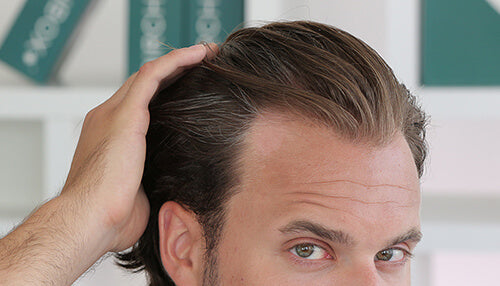
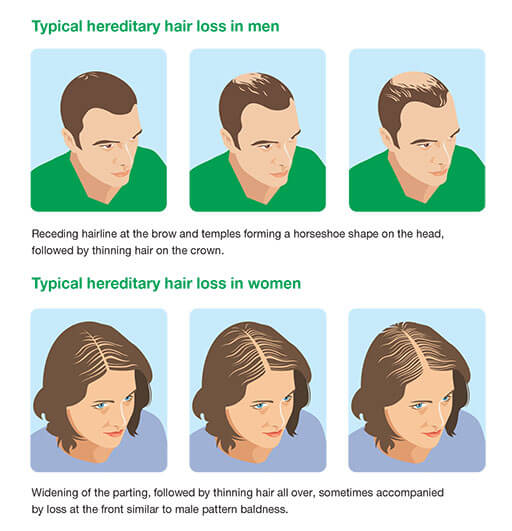
- Gradual thinning of hair at the top – This is the type of hairloss that occurs most often. With men, hair typically starts to recede from the forehead in a line pattern that looks like the letter “m”. Women usually keep their hairline but experience a widening of their part on their
- Patchy or circular bald areas – Another sign is the appearanceof coin-sized bald spots. This form of hair loss typically only occurs on the scalp, but may also become apparent in eyebrows and beards. In certain situations, one’s skin may feel itchy prior to the hair falling
-
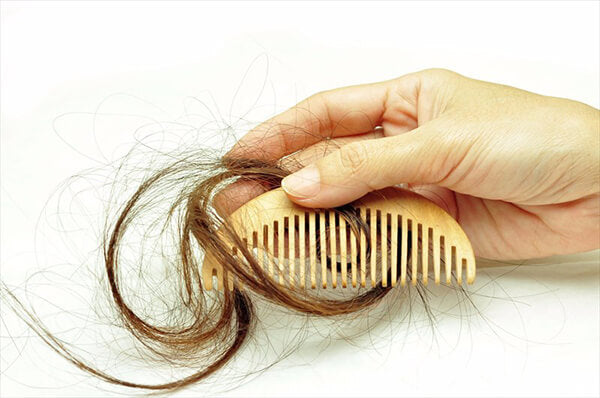
Hair suddenly loosening – This is the sign that people are most likely to notice first. While combing their hair over the sink, washing it in the shower, or just tugging on it, they may notice more strands falling out than usual – even coming out in small clumps. While it usually just happens during a normal routine, the situation may also be caused by an emotional or physical shock.It usually leads to hair thinning rather than bald
- Total-body hair loss – Certain medical treatments (forexample, chemotherapy for cancer) can result on full-body hair loss, although sufferers are usually prepared in advance, and the hair typically
- Scaling patches spread across the scalp. This symptom is often evidence of a ringworm. It may be joined by signs such asredness, swelling, oozing, and broken hair.
- Skin conditions – Cystic acne, the most severe form of the condition, may serve as a precursor to hair loss. It is characterized by a heavily blemished face, limbs, and back, and results fromthe hormonal imbalances that also cause hair loss. Seborrheic dermatitis, a skin issue involving a significant amount of sebum building up on the scalp, also comes from such imbalances. Both of these issues cause thinning of the
As the list of symptoms show, hair loss can become apparent in a variety of ways. It can show up gradually or quickly, impact just the scalp or the entire body, and be short-lived or permanent. If you think what you see is cause for deep concern – particularly if the thinning or baldness is sudden and/or abundant – you may want to see your doctor, as it may be a sign of an underlying medical issue. But as you will see further on my hair loss blog, for benign, naturally-occurring forms of hair loss, medical treatment is just one of many options you may use to confront the problem. Before we get to that, we take a look at top causes of hair loss issue.

Is your hair thinning?
Do you need a solution to regrow your hair without taking medications?
We have the perfect therapy for you--ReHair® Laser Cap. Its a low- level laser light therapy that stimulates the hair follicle to regrow.