Updated September 12, 2026. ReHair editorial team.
Low-level light or laser therapy (LLLT) can improve hair density in some adults with androgenetic alopecia, the condition commonly called pattern hair loss. That is a narrower answer than "lasers regrow everyone's hair." The useful questions are which condition was studied, how improvement was measured and whether the evidence applies to the exact device you are considering.
What do controlled studies show?
The Liu et al., 2019 systematic review combined eight studies covering 11 double-blind randomized trials. Hair density improved more with active LLLT than with sham devices, although differences between the trials limited the comparison. This supports a potential benefit for pattern hair loss; it does not establish a guaranteed percentage gain for an individual.
How long was treatment studied?
In the Fan et al., 2018 controlled trial, 100 participants received active light on one side of the scalp and sham treatment on the other over 24 weeks. Several measures favored the active side at follow-up. The study reported no serious adverse events within its observation period. Those findings are not a promise of visible results by a particular week or proof that every device is risk-free. Its session schedule should not be copied to another model.
What does "it works" mean?
- Hair density: the number of hairs measured within a defined area.
- Hair thickness: the diameter of measured strands, a different outcome from hair count.
- Visible coverage: how the hair looks in a standardized image, influenced by more than one measurement.
- Personal benefit: whether a change addresses your own concern and justifies the cost and routine.
Can a before-and-after photo answer the question?
It can illustrate an experience, but a photo alone cannot show why a change occurred. A fair comparison needs consistent lighting, angle, hairstyle and dates. Other treatments should be recorded. A controlled study uses a comparison group or area to help separate a treatment effect from changes that might have happened anyway.
Does this verify a specific ReHair device?
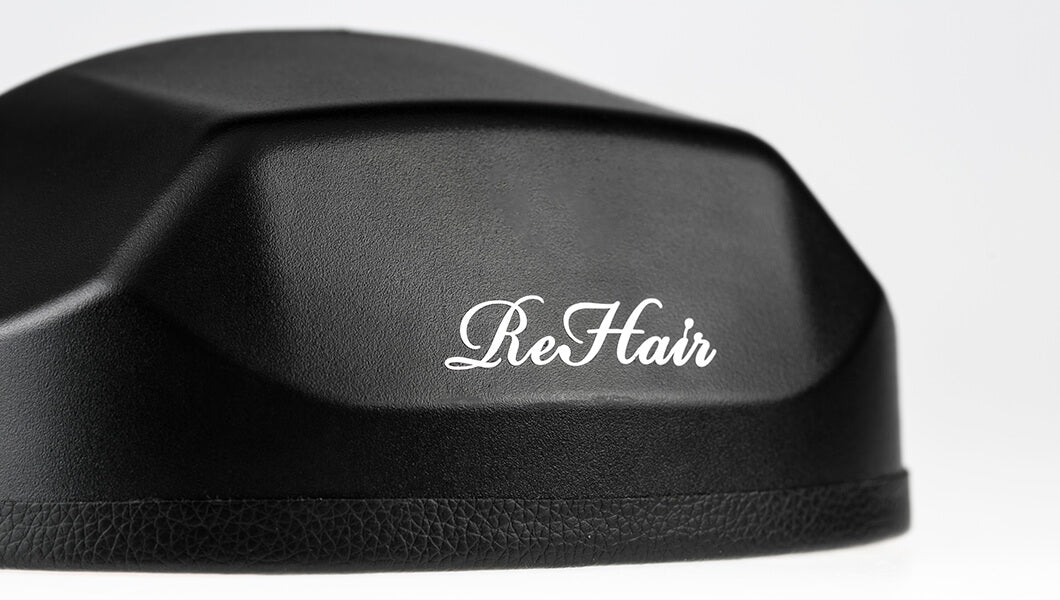
No model-specific clinical study is established by the references above. Category-level research is not the same as testing the ReHair laser cap or ReHair home-use comb. Before choosing one, match the product identity to its instructions and any evidence supplied by the manufacturer.
A practical next step
First establish the likely cause of your hair loss. If LLLT is an appropriate option, choose a documented model and agree on a realistic way to assess progress. Record a baseline before starting and review your experience at an interval appropriate to your care plan. Avoid changing several treatments at once if you want a useful record of what changed.
Related reading
- Laser Caps vs Laser Combs: How to Compare the Formats
- Using a ReHair Laser Comb: Check Your Model Instructions
General information, not an individual diagnosis or treatment prescription. Follow the instructions for your exact device and seek qualified advice for personal medical questions.